Showing posts with label Reconciliation. Show all posts

Sunday, December 08, 2019

SERMON FOR SECOND SUNDAY IN ADVENT 2019

Sermon preached at the Church of St John the Baptist, Eltham
at Parish Mass on Sunday, December 8th, 2019

‘John the Baptist appeared in the wilderness of Judea proclaiming
‘Repent, for the kingdom of heaven  has come near.’ (Matt. 3:1)
X
INTRODUCTION
I wonder what it must have been like to be amongst the crowd of people who came to the river Jordan and listened to John the Baptist?  To have stood there and heard him proclaim his message of repentance? 

It was a thought that came to mind when I stood with a group of pilgrims on the banks of the river Jordan a month ago and imagined facing the great Forerunner. Of what do I need to repent?  My failure to take the gospel seriously?  Having a heart that’s quick to judge others?  And not quick to give thanks and praise?  My lack of generosity?  All this and more I would – and do – need to confess.  Of course, having sensed all that I may have turned away and ignored what I was hearing – run away from what I knew to be true and buried myself in my usual round of work; of fun and games. Of distraction.  But, maybe, something of what I heard might have pricked my conscience.

REPENTANCE
Today’s gospel, of course, is all about the need for repentance.  To face ourselves with those awkward and painful questions – but questions which, in the end, are an invitation to step into life, unbound by all that prevents us, ties us down and causes pain to ourselves and – more importantly – to others.  Advent is the season for preparation, not just for the fun and jollity of Christmas nor (and I say this knowing I might be labelled a heretic) is it ‘all about the children’….  So, what’s Christmas about?  It’s about the coming of God and His Kingdom amongst us.  A time when many different images are used to convey this message and the consequence of ignoring the Reign of God. 

DEVELOPING FAITH
If I stop and look back even earlier, I realise how grateful I am that my own faith developed through the catholic tradition of the Church of England.   I learnt that one of the important elements in our preparation for Christmas isn’t just about writing cards and buying presents, but about preparing ourselves for the coming of the God-infant of Bethlehem.  Let me return to that pilgrimage to the Holy Land for a moment. 

One of the things that most touched the pilgrims was the plight of the Palestinians, and some of them were moved to anger as we gazed at the separation wall which runs close to the little town of Bethlehem.  It’s a wall which stands for everything that separates human beings and which God came to tear down that we might be reconciled one to the other.  But it also stands for something much deeper – it stands for our separation from God and from that primary relationship that determines how we live.  So, as a catholic Anglican, I’m reminded of the fundamental importance of repentance.  Of recognising my sin and owning it – trying to take down that ‘wall of separation’ – of isolation.  So, like millions of others, I know I need to make my confession as part of my preparation for Christmas.

“Bless me, Father, for I have sinned.”
Some of you will know that the opening words of the Confession are these: “Bless me, Father (or Mother), for I have sinned”.  It’s an odd way to begin, to ask for a blessing because one has sinned.  Surely the right way would be for the penitent to say, “Forgive me, Father, for I have sinned”.  But, no, that is the opening request.  For a blessing.   Yet, thinking a little more deeply, those words are right.  For the very act of coming to Confession, of acknowledging oneself as a sinner, is welcomed by God who rejoices in our repentance.  It offers a blessing to the one who seeks forgiveness.

MAKING AMENDS - THE SACRAMENT OF RECONCILIATION
At the heart of the Christian Faith lies this matter of forgiveness and reconciliation.  It is, perhaps, the most crucial movement in human life and the scriptures constantly remind us of the way in which God is working to reconcile the world.  Ever since the dawn of Christianity this need for reconciliation has been realised and the sacramental life of the church has reflected this.  And whilst Baptism cleanses us of sin, we don’t stop sinning and so the Sacrament of Confession, or as it has become known the ‘Sacrament of Reconciliation’, has become, from the earliest times, part of the ministry of the church.

Whilst there are so many references in the scriptures to the need for forgiveness and reconciliation, probably the most powerful image that’s moved people to make their confession is that of the return of the Prodigal Son, which has also been called the ‘Parable of the Loving Father’.  If you’re unfamiliar with the story it concerns a young man who, having squandered his inheritance and lost all his friends, decides to return to his home and admit his mistakes. 

In the parable there are some telling phrases, the first of which is connected with why penitents ask – confidently – for God’s blessing.  As the repentant son turns to home Jesus says this:  ‘But while he was still far off, his father saw him and was filled with compassion; he ran and put his arms around him and kissed him.’ (Lk. 15:20)

It’s this deep compassion – love – that the father had for his son that is activated as the son makes that first step to return that means God will bless all those who seek forgiveness for their sins.  Who seek reconciliation. 

The other interesting phrase Jesus uses is this: ‘when he came to himself’ (Lk. 15:17).  There is something about sin which is unnatural.  We were not created for sin even though it has power over us.  Or, to put it another way, we can be drawn away from that which we were created to be and be enticed by its opposite.  For sin is the corruption of our good nature.  When we sin we are ‘not ourselves’. 

In religious terms, to be ‘ourselves’ is to live in the freedom that comes as we seek at-one-ness with God.  And so the penitent kneels before the priest and the priest encourages them:  “The Lord be in your heart and on your lips that you may rightly and truly confess your sins, in the name of the Father, and of the Son + and of the Holy Spirit” 

Making your confession – being open and honest – may be a blessing in disguise, but it’s a costly blessing.  After all, sin has a price.  And so, with such encouragement, the penitent begins to open their heart:
“I confess to almighty God
and before the whole company of heaven,
that I have sinned through my own fault,
in my thoughts and in my words,
in what I have done and in what I have failed to do.”

But, hang on, you might say, ‘I don’t need to confess to anyone except God, and I certainly don’t need to confess to the saints!’  Well, that’s true, to an extent.  The problem, as I wrote in my book, is that sin isn’t a personal matter between you and God: it disrupts the whole fabric of the universe.  Like throwing stones in a pond, the ripples move out and disturb the water.  And not just on the surface. 

My sin affects earth and heaven, if you like, and I need to acknowledge that and realise that the effects of what I do, ‘in my thoughts and in my words, in what I have done and in what I have failed to do’, can have a far wider effect than I might realise.  It’s what has been called the ‘Kicking the Cat’ syndrome – and if you’re not sure what that means, have a word with me afterwards!

And we can’t always make amends for our sin.  OK, sometimes we can.  We can apologise to the ‘cat’, or ask forgiveness of someone, do something to right a wrong and so on.  But so many times it’s impossible to right all the consequences of what we have done, even if we are aware of them.  So the penitent ends their confession with the words:
“For these and all the other sins that I cannot remember
I am heartily sorry, firmly mean to do better,
most humbly ask pardon of God
and of you, father, penance (advise) and absolution.  Amen.” 

Contrition for what we have done and a real desire to amend one’s life must be part of the process.  Confession isn’t just about finding forgiveness; it’s also about desiring to change one’s life.  It’s part, if you like, of the conversion process.

Many of us might say that we only sin ‘a bit’, but the truth is that all sin has its effect on others and in order to right our relationships with the world around us we need to be in a right relationship with God.  And that is where the Sacrament of Confession is so helpful.  To say ‘sorry’ to God in the presence of another human being has a different effect on me than if I only have to do so in my heart. 

I have to face the truth of my sin when it is out there, in the open (as it were).  When we have admitted that which has wounded our relationship with others and with God and, in a real sense, wounded us. 

CONCLUSION
So we lay it all out before God in the presence of another human being.  But that human being, in his or her priestly role, is Christ-like.  And then, finally, the confessor assures the penitent of God’s forgiveness:    
“Our Lord Jesus Christ, who has left power to his Church
to absolve all who truly repent and believe in him,
of his great mercy forgive you your offences;
and by his authority committed to me,
I absolve you from all your sins, in the name of the Father,
and of the Son + and of the Holy Spirit.  Amen.
Go in peace; the Lord has put away your sins,
and pray for me, a sinner too.”

There’s something immensely liberating in those words, “I absolve you”.   It can feel like a great weight has been removed and, whilst none of us can be set free from the consequences of our sin that awful burden of guilt can be lightened. 

As we approach the coming of Christ you might consider whether making your confession has its place in your Christmas preparations.  God has given every priest authority to give absolution – it might just be your most important present to the world – and yourself.

Sunday, December 07, 2008

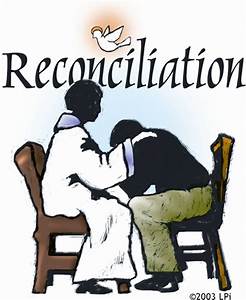
THE SACRAMENT OF RECONCILIATION

ADVENT 2(RCL Yr . B)
SUNDAY, DECEMBER 7TH 2008

‘John the Baptiser appeared in the wilderness, proclaiming a baptism of repentance for the forgiveness of sins.’ (Mk. 1: 4)

INTRODUCTION
“Bless me, Father, for I have sinned.”

So opens the dialogue between penitent and priest in the confessional. It’s an odd way to begin, don’t you think? After all, sins have been committed and one would have thought the right way to begin would be for the penitent to say, “Forgive me, Father, for I have sinned”. But, no, that is the opening request. For a blessing.

Yet, if we think a little more deeply maybe we will realise that those words are right. For the very act of coming to Confession, of acknowledging oneself as a sinner, is welcomed by God who rejoices in a repentant sinner.

MAKING AMENDS
In this second of our Advent sermons I want to address the theme of ‘Making Amends’ and think about the role of confession and repentance in our lives. At the heart of the Christian Faith lies the matter of reconciliation. It is, perhaps, the most crucial movement in human life and the scriptures constantly remind us of the way in which God is working to reconcile the world. That was why Jesus came – to reconcile the world to God. As St. Paul wrote: ‘in Christ God was reconciling the world to himself, not counting their trespasses against them, and entrusting the message of reconciliation to us.’(2 Cor. 5:19)

Think about it for a minute. Are you living at-one with all people? Or is there someone you are not reconciled with? What are you doing about it? We may, rightly, lament the wars, murders and community disorder that we read of in our papers or witness on our streets, but it all begins in the human heart when someone becomes our ‘enemy’ with whom we cannot be reconciled.

THE SACRAMENT OF RECONCILIATION
Ever since the dawn of Christianity this need for reconciliation has been realised and the sacramental life of the church has reflected this need. Whilst Baptism cleanses us of sin, we don’t stop committing them and so the Sacrament of Confession, or as it has become known the ‘Sacrament of Reconciliation’, has been part of the ministry of the church.

Now whilst there are so many references in the scriptures to the need for forgiveness and reconciliation, it is probable that the most powerful image which has moved people to make their confession is that of the return of the Prodigal Son, which has also been called the Parable of the Loving Father. If you are unfamiliar with the story it concerns a young man who, having squandered his inheritance and lost all his friends, decides to return to his home and admit his mistakes.

In the parable there are some telling phrases, the first of which is connected with why penitents ask – confidently – for God’s blessing. As the repentant son turns to home Jesus says this: ‘But while he was still far off, his father saw him and was filled with compassion; he ran and put his arms around him and kissed him.’ (Lk. 15:20)

It is this deep compassion – love – that the father had for his son that is activated as the son makes that first step to return to his father that means God will bless all those who seek forgiveness for their sins. Who seek reconciliation.

The other interesting phrase Jesus uses is this: ‘when he came to himself’ (Lk. 15:17). There is something about sin which is unnatural. We were not created for sin even though it has power over us. Or, to put it another way, we can be drawn away from that which we were created to be and be enticed by its opposite. For sin is the corruption of our good nature. An inevitable consequence of life. When we sin we are ‘not ourselves’. In religious terms, to be ‘ourselves’ is to live in the freedom that comes as we seek at-one-ness with God.

And so the penitent kneels before the priest. (Just over there.) And the priest encourages them: “The Lord be in your heart and on your lips that you may rightly and truly confess your sins, in the name of the Father, and of the Son + and of the Holy Spirit” Making your confession – being open and honest – may be a blessing in disguise, but it’s a costly blessing. After all, sin has a price.

With such encouragement the penitent begins to open their heart:
“I confess to almighty God
to blessed Mary ever Virgin,
to the holy Apostles Peter and Paul,
and before the whole company of heaven,
that I have sinned through my own fault,
in my thoughts and in my words,
in what I have done and in what I have failed to do.”

But, hang on, someone will say, ‘I don’t need to confess to anyone except God, and I certainly don’t need to confess to the saints!’ Well, that’s true, to an extent. The problem is that sin isn’t a personal matter between you and God. The fact is that sin disrupts the fabric of the universe. Like throwing stones in a pond, the ripples move out and disturb the water. And not just on the surface. My sin affects earth and heaven, if you like, and I need to acknowledge that and realise that the effects of what I do, ‘in my thoughts and in my words, in what I have done and in what I have failed to do’, can have a far wider effect than I might realise. It’s what has been called the ‘Kicking the Cat’ syndrome, and if you’re not sure what that means, have a word with me afterwards!

And we can’t always make amends for our sin. Sure, sometimes we can. We can apologise to the ‘cat’, or ask forgiveness of someone, do something to right a wrong and so on. But so many times it’s impossible to right all the consequences of what we have done, even if we are aware of them. So the penitent ends their confession with the words: “For these and all the other sins that I cannot remember I am heartily sorry, firmly mean to do better, most humbly ask pardon of God and of you, father, penance (advise) and absolution. Amen.”

Contrition for what we have done and a real desire to amend ones life must be part of the process. Confession isn’t just about finding forgiveness; it’s also about desiring to change one’s life. It’s part, if you like, of the conversion process.

MORTAL AND VENIAL SINS
Now, sometimes we are fully aware that we have sinned. The seven ‘deadly’ sins are fairly obvious: lust, gluttony, greed, sloth, wrath, envy and pride. But you may need to reflect on these a bit to recognise that they are ‘deadly’. Many of us might say that we only sin ‘a bit’. And that’s probably true. Traditionally the church has spoken of two ‘classes’ of sin – mortal and venial. A mortal sin involves our knowingly and wilfully doing something which breaks our relationship with God. Like murder or slander, for example. A venial sin, on the other hand, is a ‘lesser’ sin that, whilst it may not break our relationship with God, nonetheless injures it.

Now, of course, sin also has its effect on others. It doesn’t just affect our relationship with God, but in order to right our relationships with the world around us we need to be in a right relationship with God. This has always been the teaching of the church. And that is where the Sacrament of Confession is so helpful. To say ‘sorry’ to God in the presence of another human being has a different effect on me than if I only have to do so in my heart. There is a real way in which I have to face the truth of my sin when it is out there, in the open (as it were). In the earliest days of Christianity people did make ‘open confessions’ to the church. So, this morning, as part of Mass we would tell each other what we had done wrong…! Now that’s fine providing we were all loving, generous, compassionate and confidential human beings. But … you can imagine what began to happen!! So, very quickly it was realised that, whilst the principle was good, the practice needed to change. And so confession was only to be made to the priest who was bound by strict rules of confidentiality. The ‘Seal of the Confessional’.

The Roman Catholic and Orthodox Churches require their members to make their confession at various times, usually before major festivals or before receiving Communion. Our Anglican Tradition has taken a different approach to the Sacrament. The 1662 ‘Book of Common Prayer’ explicitly sanctioned Confession in its Order for the Visitation of the Sick in these words: ‘Here shall the sick person be moved to make a special Confession of his sins, if he feel his conscience troubled with any weighty matter. After which Confession, the Priest shall absolve him (if he humbly and heartily desire it)’. Over the years the teaching of our church has been expressed as: “All may, some should, none must.” And there are many for whom confession is part of their spiritual discipline as they seek to develop their relationship with God.

CONCLUSION
And so we lay it all out before God in the presence of another human being. But that human being, in his or her priestly role, is Christ-like. The confessor is to be Father, Teacher, Doctor and Judge who is motivated by the compassion of Christ. The confessor needs to sift through what has been said for, often, what most troubles the penitent may be of less consequence than other matters which have emerged. Many of us worry unnecessarily but have no one who can help us sort out our concerns. I have always been amazed by the way my confessors have identified matters that need attention which I may not have recognised and have not commented on what I considered ‘grave’ matters. And, on reflection, I have often realised the wisdom of their discernment.

So the confessor assures the penitent of God’s forgiveness:
“Our Lord Jesus Christ, who has left power to his Church
to absolve all who truly repent and believe in him,
of his great mercy forgive you your offences;
and by his authority committed to me,
I absolve you from all your sins, in the name of the Father,
and of the Son + and of the Holy Spirit. Amen.
Go in peace; the Lord has put away your sins,
and pray for me, a sinner too.”


There is something immensely liberating in those words, “I absolve you”. It can feel like a great weight has been removed and, whilst none of us can be set free from the consequences of our sin that awful burden of guilt can be lightened. As someone has written about their First Confession:

"I began "Bless me Father, for I have sinned. This is my first confession." I then pulled the list of sins out of my pocket and began reading them. When I got to the second or third one I began crying, and this made it difficult to talk. I ended up rushing through my list because I wanted to be able to say them all before my crying hindered me from speaking at all. I think the crying was a result of the Holy Spirit bringing me into a state of contrition. I had felt fine before going into the confession, and I never expected I would break down like that. I'm very glad this happened though, and I understand why reconciliation is sometimes referred to as "the sacrament of tears."

Yet the practice of confession isn’t just about making us feel better, it’s about accepting our role in that business of reconciliation. Taking responsibility for our part in re-ordering the world. Accepting that Christ came to reconcile all things – even me – to God. Perhaps you might consider whether making your confession has its place in your Christmas preparations. It might be your most important present to your self and the world.

Amen.